ServicesDrywall Finishing
Drywall Finishing in Carteret
We tape, mud and sand drywall so the seams and screw heads disappear and your walls are ready for primer and paint. We plan each coat around indoor temperature and humidity, so the compound cures properly and the finish holds up through the seasons.
What drywall finishing covers
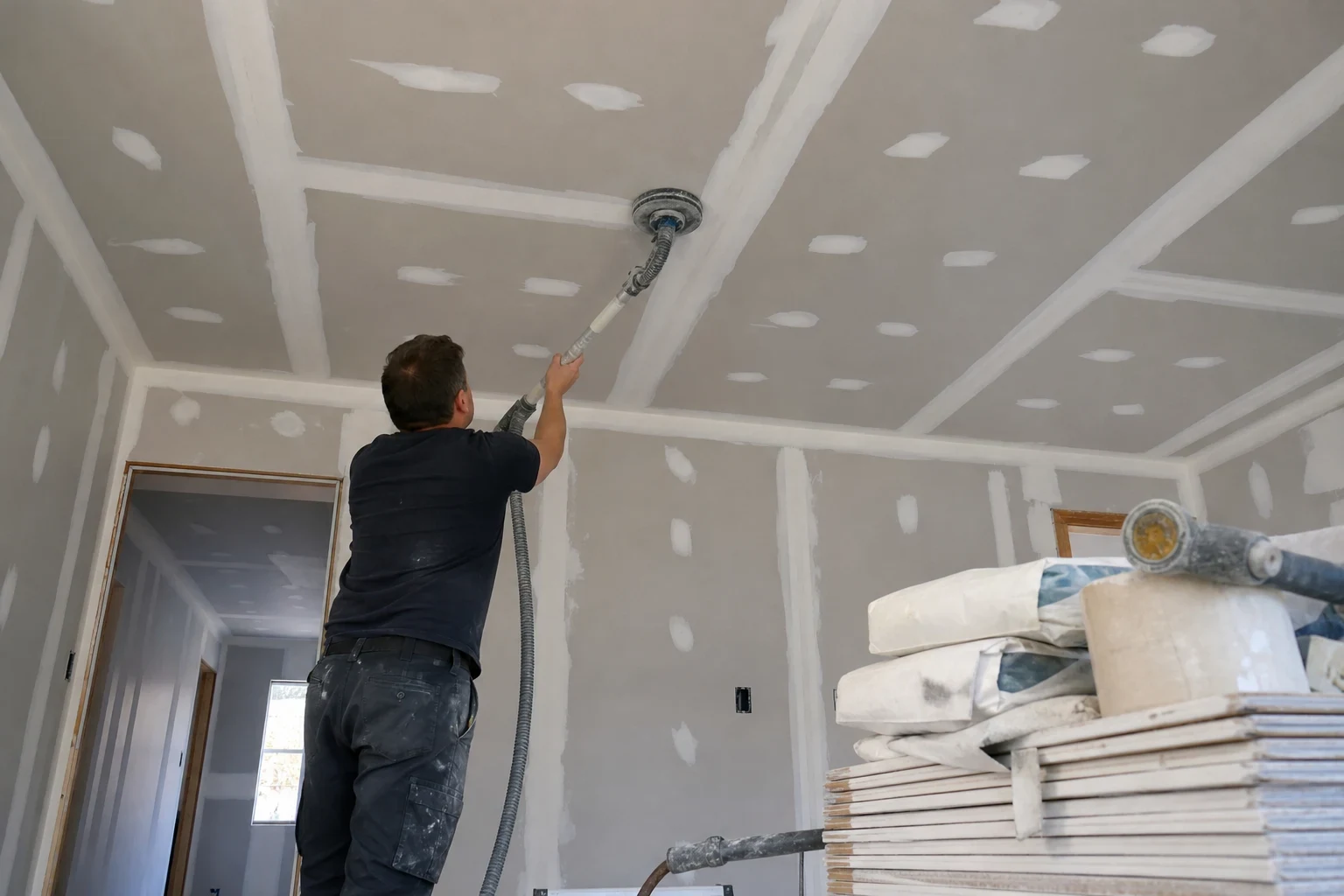
Hanging the boards is only half the job. Finishing is the part you actually see: embedding tape in the joints, building up thin coats of joint compound, feathering the edges wide and sanding until the wall reads as one flat plane. Done well, the wall looks like one continuous surface. Rushed, it leaves ridges, bubbles and seams that show the moment light hits the wall.
We finish new drywall after our own drywall hanging work, and we also take over rooms where the boards are already up and the taping still needs doing. We match the finish level to how the room will be used, from a basic taped coat in a utility space to a smooth level suited to bright light and glossy paint.
Timing matters more than most people expect. Compound dries slowly in a humid summer and can crack if it dries too fast next to a cranked-up heater in January. We schedule coats with that in mind, so the room is done and ready before your busy season instead of halfway there.
What's included in our finishing work
- Taping every joint and corner
- We bed paper or mesh tape in the flat seams and use corner bead on outside corners. Inside corners get folded tape so they stay crisp and straight.
- Multiple coats of compound
- A bedding coat, a fill coat and a finish coat, each wider than the last. Screw and nail heads get coated each round so they never ghost through the paint.
- Careful sanding
- We sand between coats and after the final coat, checking with a work light held low against the wall to catch ridges and dips before you ever see them.
- Texture matching
- If the new section sits next to an existing textured wall or ceiling, we match the texture so the transition blends in.
- A clean work area
- We cover floors, mask doorways and vents, and clean up dust at the end of each day so you can keep using the rest of your home.
When drywall needs finishing work
Seams that show through paint
Straight lines appearing where boards meet usually mean the compound was spread too narrow, or it shrank back into the joint as it dried.
Popped nails and screw dents
Small bumps or shallow dimples across a wall mean the fasteners were under-covered, or the board shifted a bit over a few heating and cooling seasons.
Bubbled or cracked tape
Tape that blisters, lifts or cracks along a corner probably had too little compound beneath it. Paint can't keep it down for long, so we pull the loose piece and set new tape in fresh mud.
Board hung, joints left bare
If the drywall is up in a basement, addition or remodeled room but the joints were never taped, we can carry it through to the end.
Old patches that stand out
A past drywall patch that left a raised square or a mismatched texture can be refinished until it blends into the wall around it.
What shapes the price of drywall finishing
We price each finishing job from the room we see, not a set rate. Once we've looked at the space, you get a written estimate with every part of the work on its own line, so the cost is clear before we begin.
Wall area and number of joints
Bigger walls and more seams take more tape, more compound and more coats. Lots of short boards take longer than a room hung with long sheets.
Level of finish
Closets and garages need fewer coats than a living room with large windows and semi-gloss paint. Higher levels mean a skim coat and more sanding.
Height and ceilings
Ceiling seams and tall stairwell walls need more setup and time than ordinary walls within easy reach.
Openings, arches and corners
Many outside corners, window returns or curved walls mean more bead and more detail work.
How the room dries
A very cold or very humid room slows curing between coats, which can add a visit or call for equipment to manage the air.
How a finishing job runs
- 1
Walkthrough and plan by phone
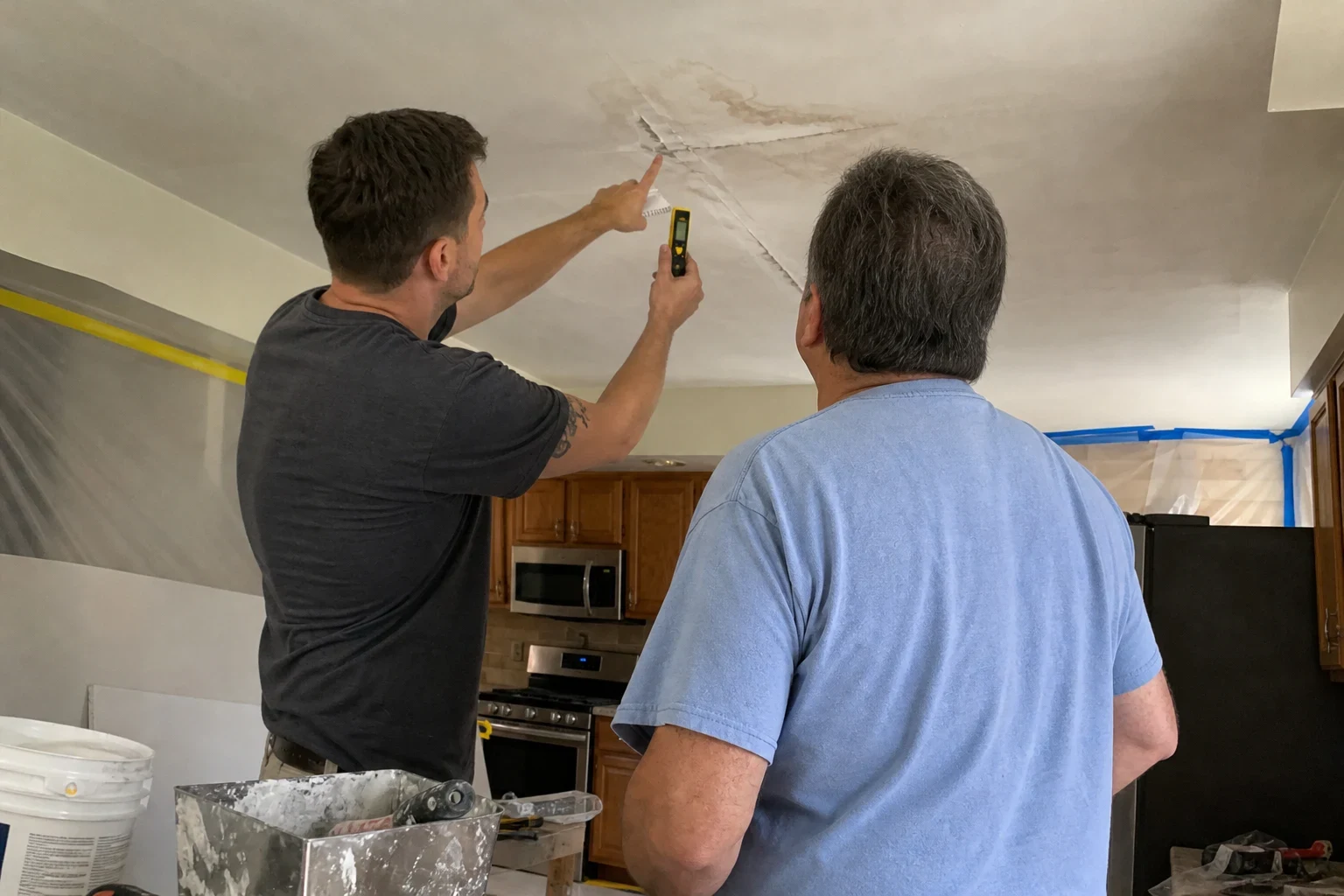
We talk through the room, the finish level you want and your timeline. Then we look at the boards in person and check the indoor conditions we'll be working in.
- 2
Prep and protection
We lay floor protection, mask openings and set any corner bead. If the boards have loose fasteners or damaged edges, we fix those first.
- 3
Taping and coating
Tape and the first coat go on, then each later coat after the one before has dried. In humid weather we may run fans or a dehumidifier to keep drying on track.
- 4
Sanding and final check
We sand, inspect under raking light and touch up anything that shows. You get a wall ready for primer, and we walk it with you before we pack up.
Questions about finishing drywall
How many days does a room take to finish?
Most rooms take several days. Each coat of joint compound has to cure completely before the next one, and coating over damp mud causes cracks and soft spots. Humid summer days slow things down, and a warm, dry room speeds them up. Once we see the space, you get a realistic schedule.
Will you finish drywall another crew hung?
We will. First we check the boards for gaps, loose screws and damaged edges. Anything that needs fixing before taping gets pointed out to you and added to the estimate.
Which finish level should I choose?
That comes down to the room and the paint. A standard smooth finish suits most living spaces, while walls hit by strong side light or getting glossy paint do better with a skim coat. We suggest the level that suits the room, not the priciest one.
Will it be dusty?
Sanding creates fine dust, so we keep it contained. Doorways get sealed, floors and vents get covered and we clean up every day, so the dust stays in the room we are working in.
What time of year works best for finishing?
We finish drywall in every season. Drying is usually easiest in spring and fall, and booking then gets the room done before the holidays or summer visitors. In summer and winter we control heat and humidity so the compound cures right.
Ready for walls that look complete
Let us know about the room, the boards and your deadline. We'll time the coats to the season and hand you a clear estimate once we've seen it.