ServicesDrywall Patching
Drywall Hole Patching in Carteret
Leave a hole in the wall long enough and it only gets bigger. We trim away the damaged board, fit a firm patch, then feather out the compound and texture until the spot disappears. Before any work begins you know the plan, and when we go the wall is smooth and the room is clean.
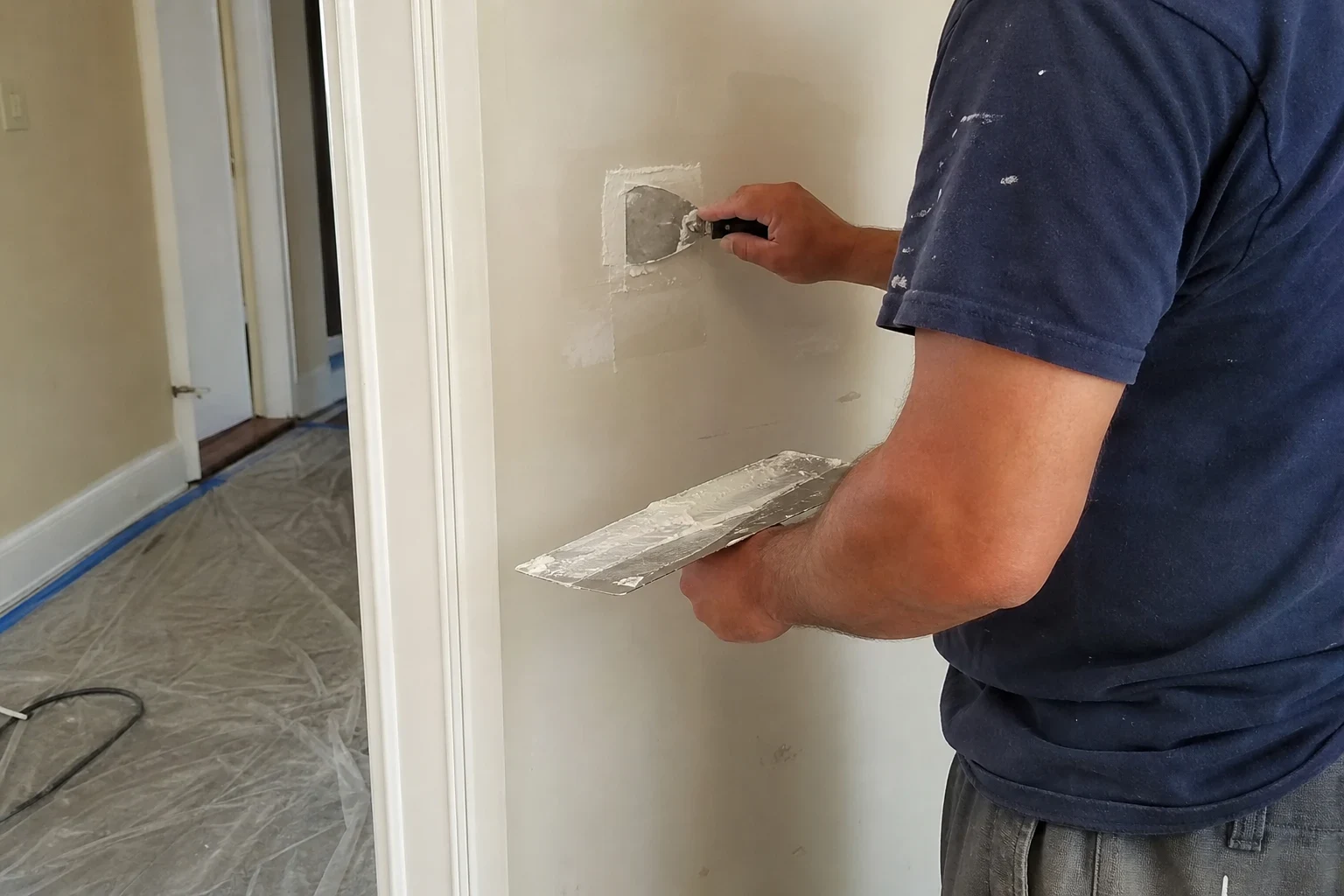
When a Patch Is the Right Fix
Drywall patching is for damage you can outline with your hand: a doorknob that went through, a fist-sized hole from moving furniture, old anchor holes from a TV mount, or a square opening left after an electrician or other repair. The surrounding board is still sound, so there is no reason to replace a whole sheet.
We match the repair to the hole. Small dents and screw holes get filled and skimmed. Holes up to a few inches get a mesh or setting-compound patch. Larger openings get a new piece of drywall screwed to backing, taped and finished. If we find soft, stained or crumbling board around the hole, we tell you, and that job moves to our drywall repair or wall repair work instead.
Timing matters more than most people expect. Joint compound dries slowly in humid summer air and can shrink or crack when winter heat dries a room out fast. We plan coats and drying time around the season so the patch holds up once the weather turns.
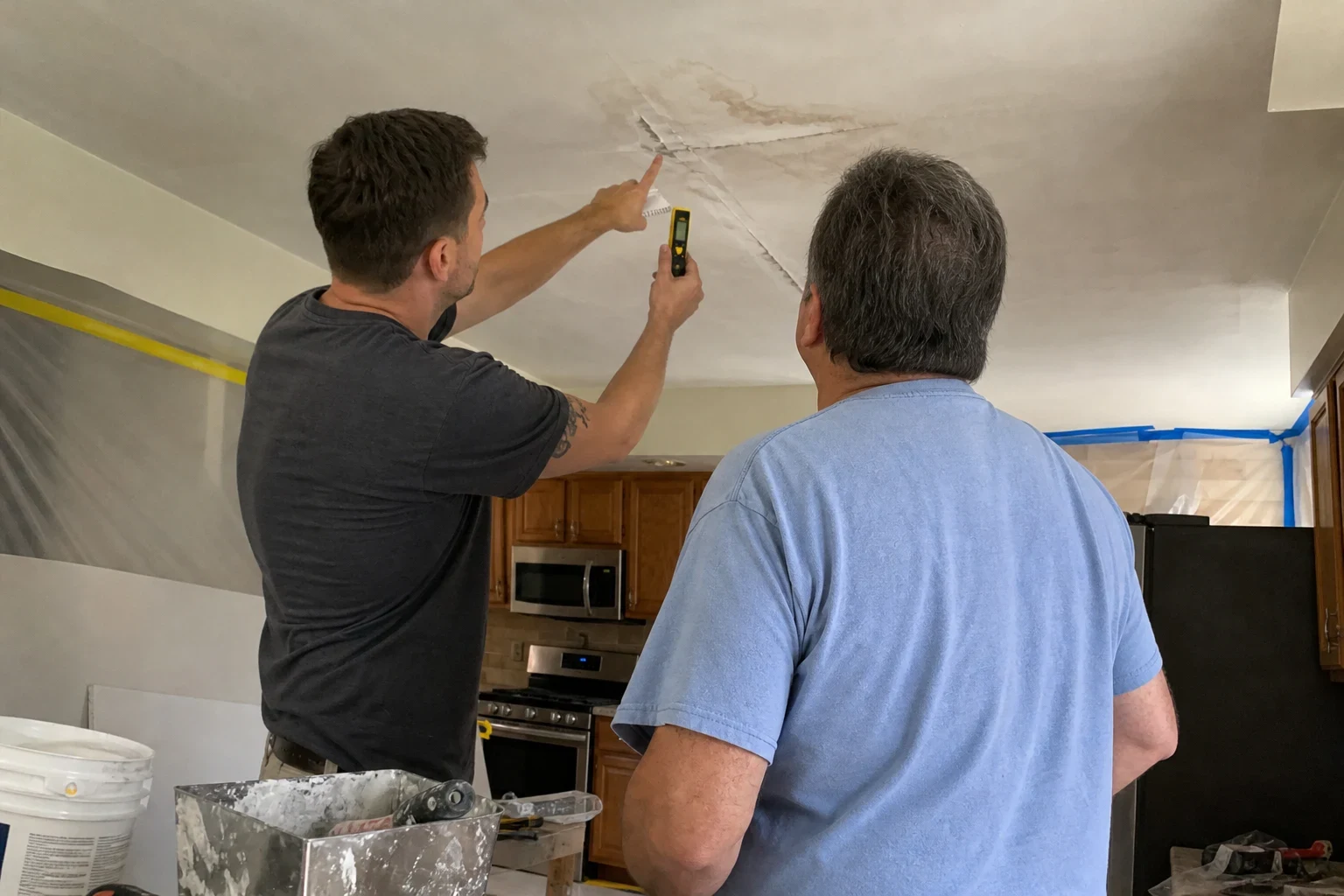
What Comes With Every Patch
- 01
Cutting back to solid board
Torn, ragged edges get trimmed until only sound board is left. A neat square hole holds a patch much better than a jagged one.
- 02
Support behind a cut-to-fit piece
Bigger holes get wood or metal backing set inside the wall, and a drywall piece sized to the opening is screwed to it. Push on it later and it stays put.
- 03
Taped seams in hard-setting mud
We embed paper or mesh tape in setting compound, which hardens solid and does not shrink much. The finish coats use a lighter compound.
- 04
Wide coats, sanded flat
Every coat reaches a bit farther out than the one before, and we sand it down so side light shows no bump.
- 05
Your texture, copied
Orange peel, knockdown or a hand-troweled finish gets recreated on the patch, so it never reads as a smooth spot on a textured wall.
- 06
Clean room when we go
We cover the floor, keep dust near the patch and vacuum before leaving. Ask for a paint touch-up and the spot is ready to live with.
Questions about Drywall Patching?
Call(732) 696-7648Signs a Wall Needs Patching
A hole you keep covering
If a picture frame or poster is hiding damage, it is time. Open holes let edges crumble and grow.
Torn paper around an old anchor
Pulled anchors leave fuzzy, raised paper that will not take paint smoothly. It needs to be cut back and skimmed.
Doorknob dent behind a door
A dent today becomes a hole after a few more swings. We patch it and can suggest a simple stop to protect it.
Cut-outs from other trades
Electricians and repair crews often leave a square opening behind. We close it so it disappears under paint.
Cracks around an earlier patch
A spider web of cracks or a visible outline means a past patch was not backed or taped. We redo it properly.
How Patching Day Goes
- 1
Look and plan
We look at the hole, check the board around it and explain what kind of patch it needs. You hear how many visits it will take before any work starts.
- 2
Protect the room
Drop cloths go down and nearby furniture is moved or covered. We keep the work area tight so the rest of your home stays clean.
- 3
Cut, back and patch
Damage is squared off, backing goes in where needed, and the new piece or mesh is set and taped with the first coat of compound.
- 4
Coats and drying
Most patches need two or three coats with drying time between them. In damp months that can mean a return visit; we tell you up front rather than rushing a coat that is still soft.
- 5
Sand, texture and finish
We sand smooth, match the texture and check it under raking light. The patch is primed or touched up if you asked for it, and we clean up before leaving.
What Shapes the Cost of a Patch
Patching is priced by the work involved, not a flat rate per hole. Size and number of holes matter, and so do the wall finish and how many trips the drying time needs. We walk you through each item on the phone or at the visit so the number makes sense.
- Size and count
- One screw hole and six fist-sized holes are very different jobs. Several patches in one room are usually more efficient than several separate visits.
- Texture on the wall
- Smooth walls are simplest. Knockdown or hand-applied texture takes extra steps to match well.
- Location
- Patches high on stairwell walls, behind fixtures or around outlets take more setup and care.
- Return visits
- Larger patches need coats to dry before the next one. Humid weather can stretch that, which may add a trip.
- Paint touch-up
- Adding a touch-up after the patch adds a little time, and you will need the original paint or a close match.
Drywall Patching Questions
Can you make the patch invisible?
On most walls, yes, once it is painted. We feather the compound wide and match the texture so there is no outline. Very glossy paint shows more, and we will tell you if your finish is one of those.
How many visits will my patch need?
A screw hole or a shallow dent is usually wrapped up in a single trip, because quick-setting compound hardens fast enough to sand the same day. A larger opening with a new drywall piece typically takes two or three trips so every coat dries all the way through. You will know the expected schedule once we have seen the wall.
Will there be a lot of dust?
There is some sanding dust with any patch. We cover floors and furniture near the work, keep the area small and vacuum when we finish.
Do you paint the patch?
We can do a paint touch-up over the patched area if you have the paint or know the color. That blends the repair without repainting the whole wall.
Is it worth patching before winter?
It is a good time. Dry heating air is hard on fresh compound, and a patch done in mild fall weather cures evenly. Open holes also let drafts move through the wall cavity.
Do you work outside Carteret?
Yes. We patch walls in nearby towns including Woodbridge, Rahway, Linden and Perth Amboy. Give us a ring and let us know which town you are in.
Ready to Close Up That Hole
Give us a rough size for the hole and the room it is in. From there we can say which kind of patch fits and how many trips you should expect.