ServicesDrywall Repair
Drywall Repair in Carteret
A doorknob hole, a crack over the doorway, a soft spot under a window. We cut out what is damaged, rebuild it properly and match the texture around it, so the repair disappears instead of becoming the thing everyone notices.
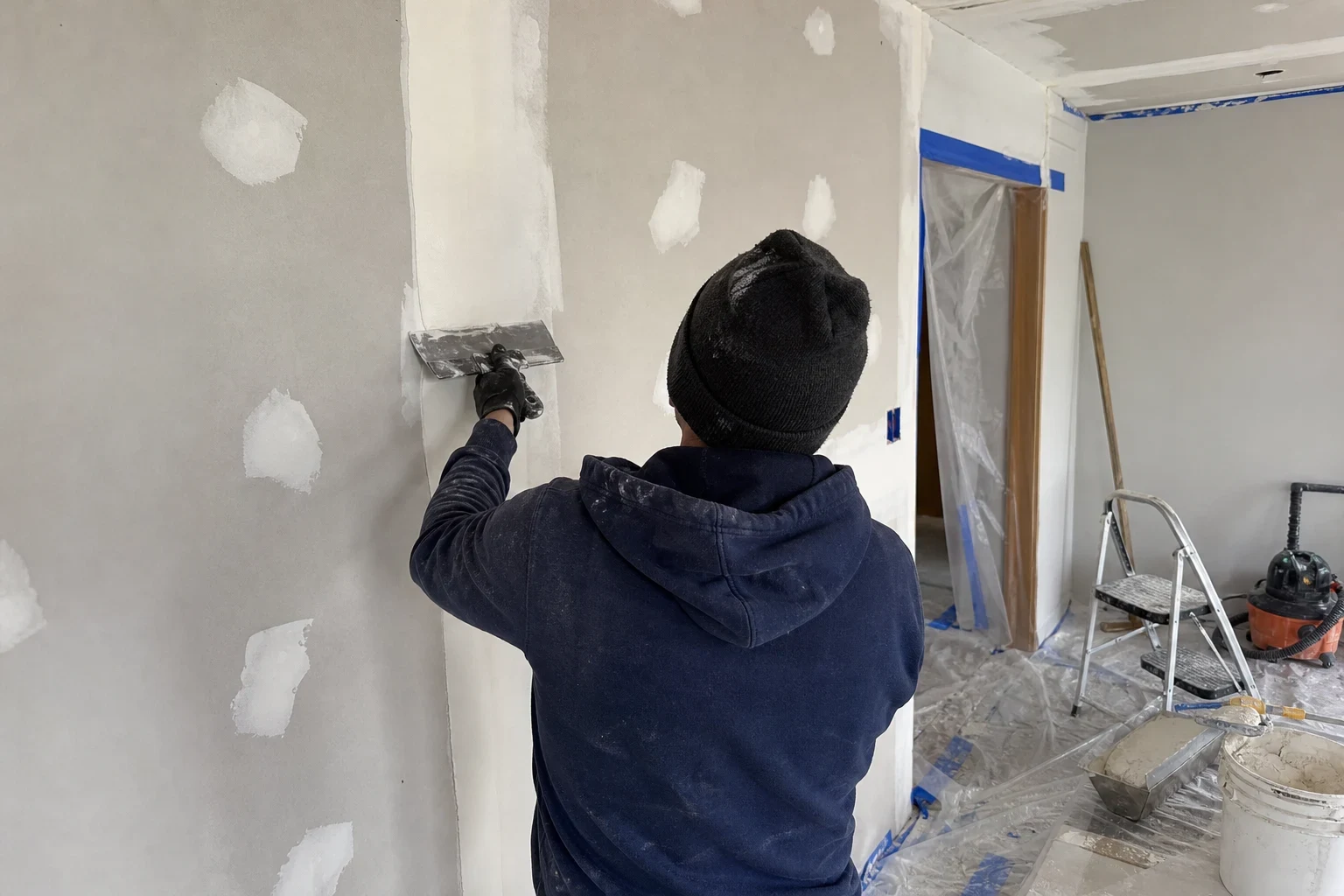
Fixing the damaged section, not the whole wall
Gypsum board handles everyday life well, but it has weak spots. Water turns the core soft and chalky, a hard bump tears the paper face, and taped seams split when framing expands and contracts through the year. Nearly all of that damage stays in one area, so a full new wall is rarely needed. What you need is the bad piece removed, solid support behind it and a finish that blends into the rest of the room.
We like to fix these things before the weather makes them worse. Humid summers swell damaged gypsum and invite mildew behind it. Dry, heated winter air shrinks framing and pulls cracks wider. Getting a repair done between those swings means it cures well and stays put.
If the damage turns out to be bigger than a repair, we will say so and explain why. Larger tear-outs fall under our drywall hanging work, and small dings may only need drywall patching.
What comes with every drywall repair
Finding out why it happened
Before fixing a wall, we figure out what made it fail. Settling cracks, door holes and leak stains each call for their own kind of repair.
Removing weak board
We take out crumbling, wet or separated gypsum until we hit a solid edge. Taping over weak board is a big reason repairs crack again within a year.
Solid backing and new drywall
Where the new piece needs support, we put in wood or metal backing, then fasten the board so it lies even with the wall around it.
Tape, compound and matched texture
Seams are taped and built up with thin coats of compound spread wide so nothing bulges. We copy your existing finish, whether orange peel, knockdown or hand-troweled.
Sanding, primer and paint touch-up
We sand the area smooth, prime the fresh compound so it does not show through, and touch up the paint over the repair.
Clean work area
We cover floors and furniture, keep dust close to the repair and vacuum before heading out.
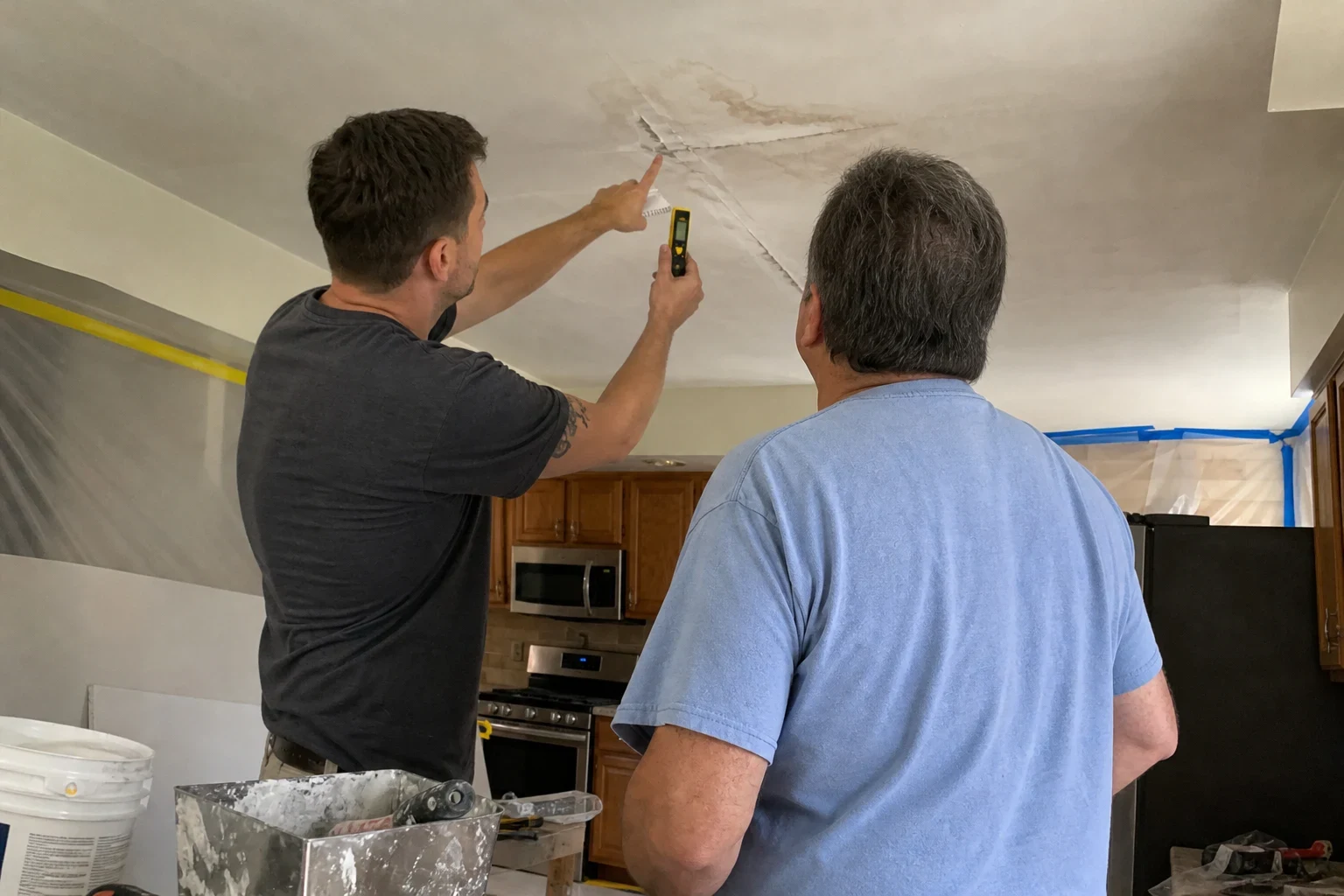
When your walls are telling you they need repair
- The same crack, again and again
- A thin crack that shows up each winter usually points to a seam or corner bead that has let go. Another round of caulk will not keep it closed.
- A line of nail pops
- Little round bumps following a stud mean the fasteners are working loose. We secure them with screws and refinish each spot.
- Stains or blistered paint
- Brown marks or soft, bubbled paint mean the board has taken on moisture. After the leak is fixed, that wet section should be removed, not painted over.
- Damage from doors and moves
- Holes from doorknobs, gouges from furniture and old shelf anchor holes are fast to fix, but they grow if the paper face keeps tearing.
- Board that gives when pressed
- If a section bends under your hand, it has pulled away from the framing and has to be fastened again or replaced.
What happens on a repair day
- 1
Start with a phone call
Tell us where the damage is and how it happened. We ask a few things about its size and cause, then pick a time that fits your week.
- 2
We look and tell you the plan
In your home we inspect the damage, test for moisture and explain in plain words what we would do and what it costs, all before any work begins.
- 3
Fix it and give it time to cure
We cover the room, remove the damaged board, put in new drywall and lay down the first coats. Deeper repairs need to dry between coats, so some take a second visit.
- 4
Final finish and cleanup
We do the last sanding, match the texture, prime and touch up the paint, then clean the room and show you the finished wall.
What sets the price of a repair
We price each job after we have seen it, and you hear the number and the reasons behind it before any work begins. Fixing one doorknob hole is a short visit, while a hallway soaked by a leak is a much bigger project. Here is what carries the most weight.
- Size and number of repairs
- A few small spots can often be handled in one trip. Larger cutouts mean more board, more mud and more drying time.
- What is behind the wall
- Damp insulation, missing backing or damaged framing all add steps. We show you what we find before doing any extra work.
- Texture and ceiling height
- Smooth walls are the simplest to match. Heavy texture, high ceilings and stairwells take more time and sometimes extra equipment.
- Return visits for drying
- Deep fills and humid weather slow curing. Repairs that need several coats on separate days cost more than a one-visit fix.
Common questions about drywall repair
- Will the repaired spot be noticeable?
- We aim for it to vanish. The compound is spread wide, the texture is matched to your wall, and the area is primed before we touch up the paint. On walls with old or faded paint, even a flawless repair can show a little, and we say so before we start if we expect that.
- How long will my repair take?
- Minor holes and cracks are often done in one trip. Larger areas usually need a few, because each layer of compound has to dry all the way before the next one, and hurrying causes shrinking and cracking. Once we see the damage, you get an honest schedule.
- Do you repair drywall that got wet?
- We do, after the water source has been stopped. The stained or wet board is cut out, the cavity is left to dry, we look for mildew and then put in a new section. Painting over damp gypsum just covers the problem for a short time.
- Should I repair the damage or replace the wall?
- Damage is usually limited to one area, so a repair is often enough. When much of the wall is damaged or the board sags in more than one spot, replacing it may be cleaner and last longer. Either way, we tell you honestly what we recommend.
- When is the best season for drywall repair?
- We repair walls all year, though spring and fall work best since indoor humidity is moderate and compound cures evenly. If cracks open up every winter, getting them fixed before the heat goes on gives the repair its best chance to hold.
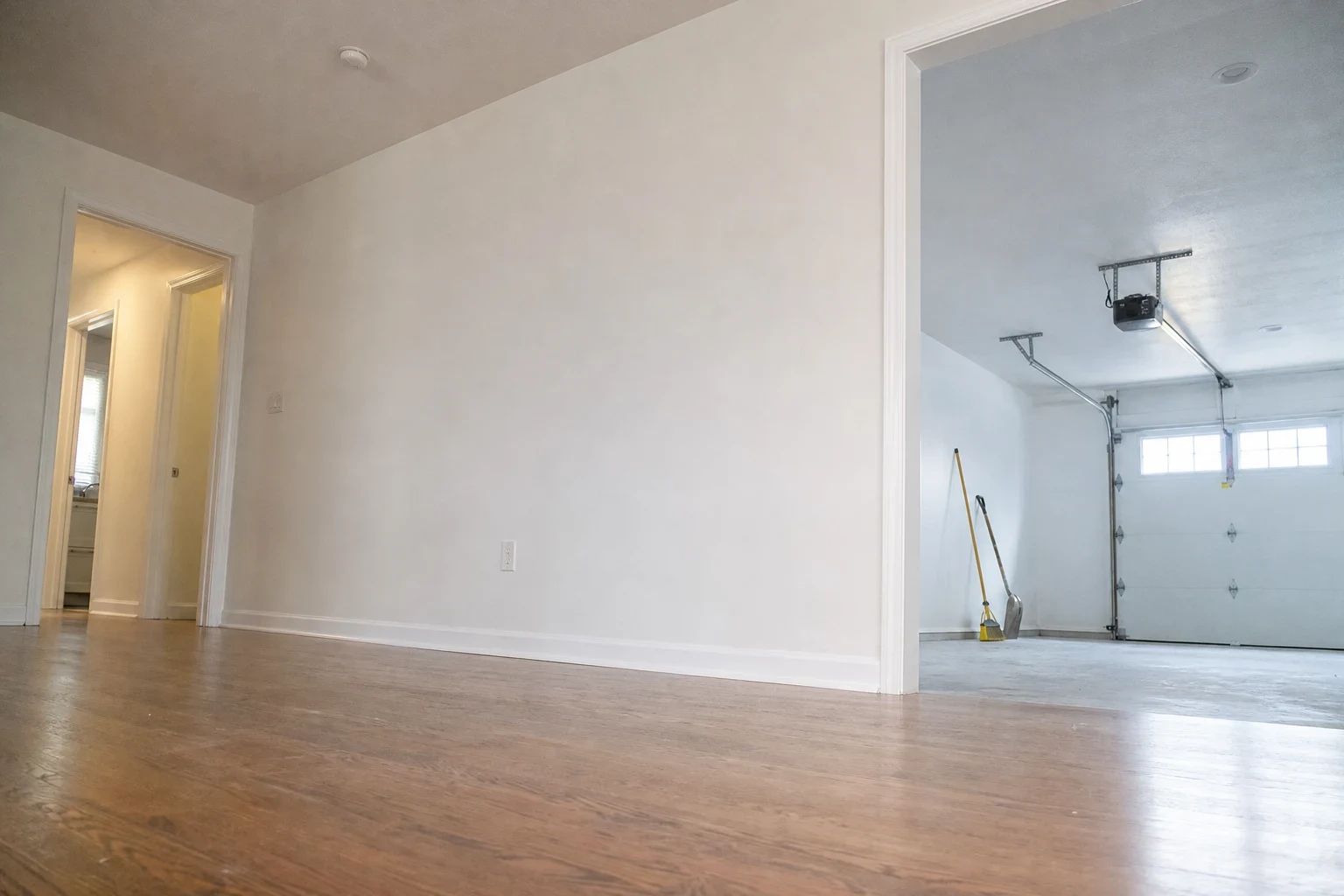
Get your walls ready for the season ahead
Tell us what is going on with your walls and we will explain how we would fix it. We work in Carteret and nearby towns including Woodbridge, Rahway and Linden.